
Texas limestone is beautiful — until years of exhaust, algae, and mineral staining turn it black. Here's how we brought the Rim Shopping Center's stone bridges back to life, and why it still looks clean more than five years later.
Drive around San Antonio long enough and you'll notice something: almost every upscale shopping center, master-planned community, resort, and Hill Country estate is built with Texas limestone. It's the signature look of our region — warm, honey-colored, timeless. But limestone has a secret. It's porous, it's soft, and if you clean it the wrong way, you'll destroy it faster than the weather ever could.
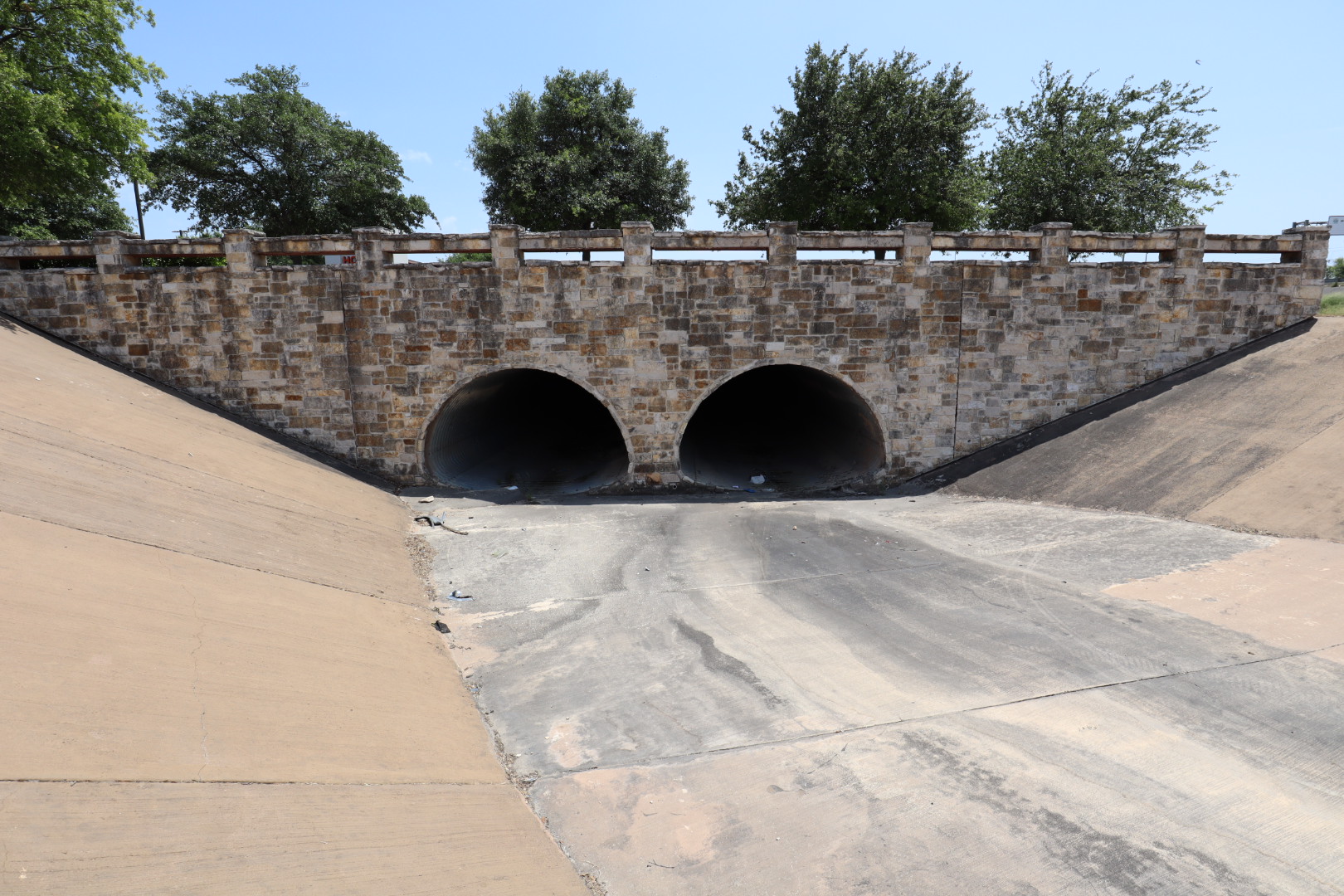
A few years back, the Rim Shopping Center in San Antonio hired Texas Pure Clean to restore the large limestone bridges and retaining walls at their main entrances. Those bridges had been sitting for years collecting exhaust from I-10, algae from the drainage channels below, and the dark mineral bleed you always see running down Texas stone. At the time of this writing, more than five years have passed since we cleaned them — and they are still clean.
Here's how we did it, and why the results have held up.
The Problem With Dirty Limestone
The dark staining you see on limestone isn't just dirt. It's a stack of different problems layered on top of each other:
- Algae and lichen colonies that root into the porous surface and hold moisture against the stone.
- Mineral bleed — iron and manganese in the stone itself migrating to the surface and oxidizing into orange, brown, and black streaks.
- Atmospheric carbon from vehicle exhaust that binds to the algae and mineral layer and turns everything a deep charcoal color.
- Efflorescence — the chalky white mineral haze that forms as water evaporates out of the stone and mortar joints.
Left alone, all of that keeps the stone permanently damp, which accelerates the biological growth and further weakens the mortar joints. It's not just cosmetic. Dirty limestone is limestone that's slowly failing.
Why You Cannot Pressure Wash Limestone
The single biggest mistake we see contractors make on limestone is treating it like concrete. Limestone is a soft sedimentary stone. Hit it with a standard pressure washer at 3,000+ PSI and you will physically erode the surface — you'll gouge out the softer layers, blow out the mortar joints, and leave a hazy, chalky finish that actually holds dirt worse than before.
Even worse, aggressive pressure washing opens up the pores of the stone, giving algae spores a bigger surface area to colonize the next time it rains. Contractors who pressure wash limestone are the reason customers call us a year later saying, "we already had it cleaned and it looks worse now than before we started."
The right way to clean limestone is with chemistry, not force.
The Soft-Wash Chemistry That Actually Works
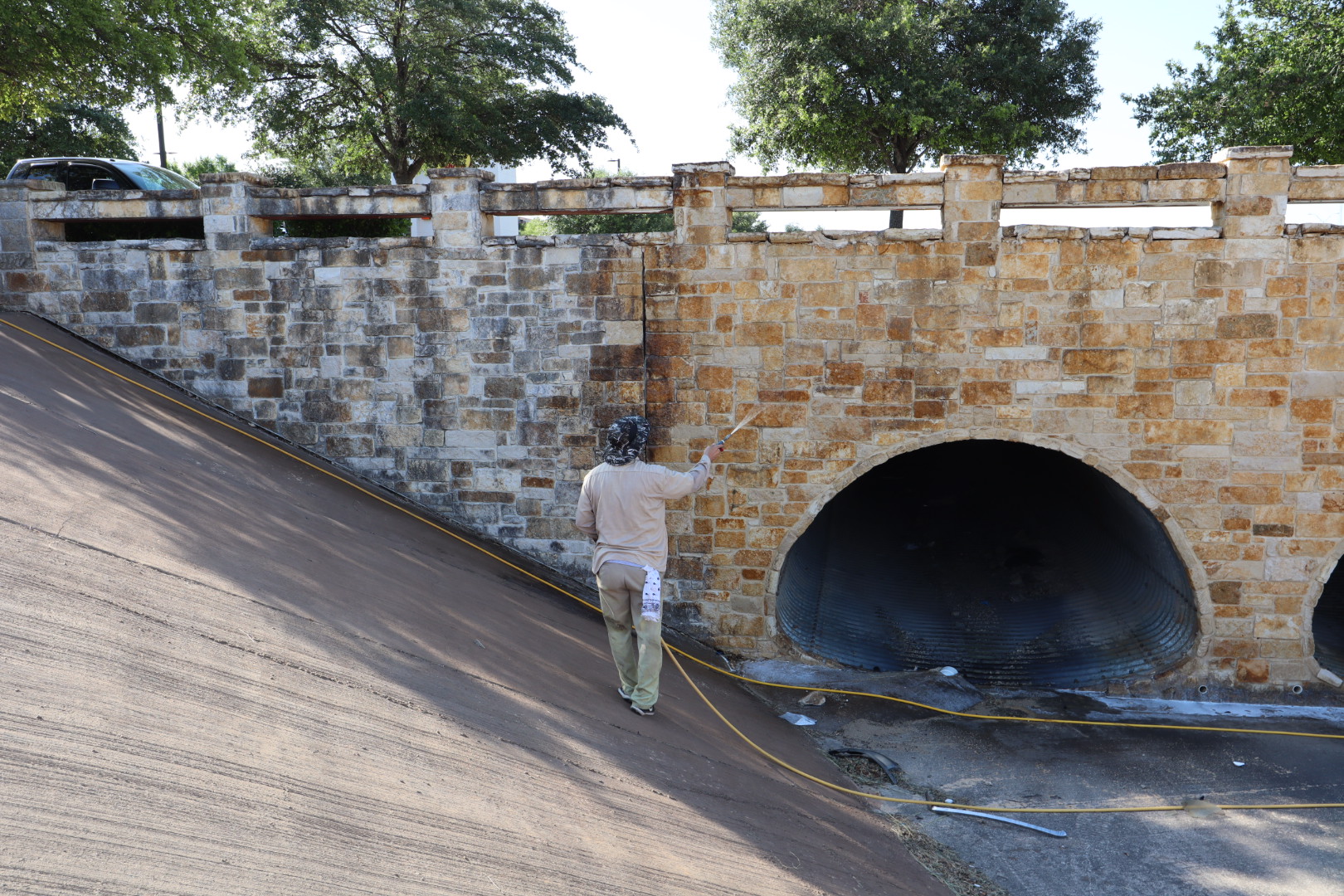
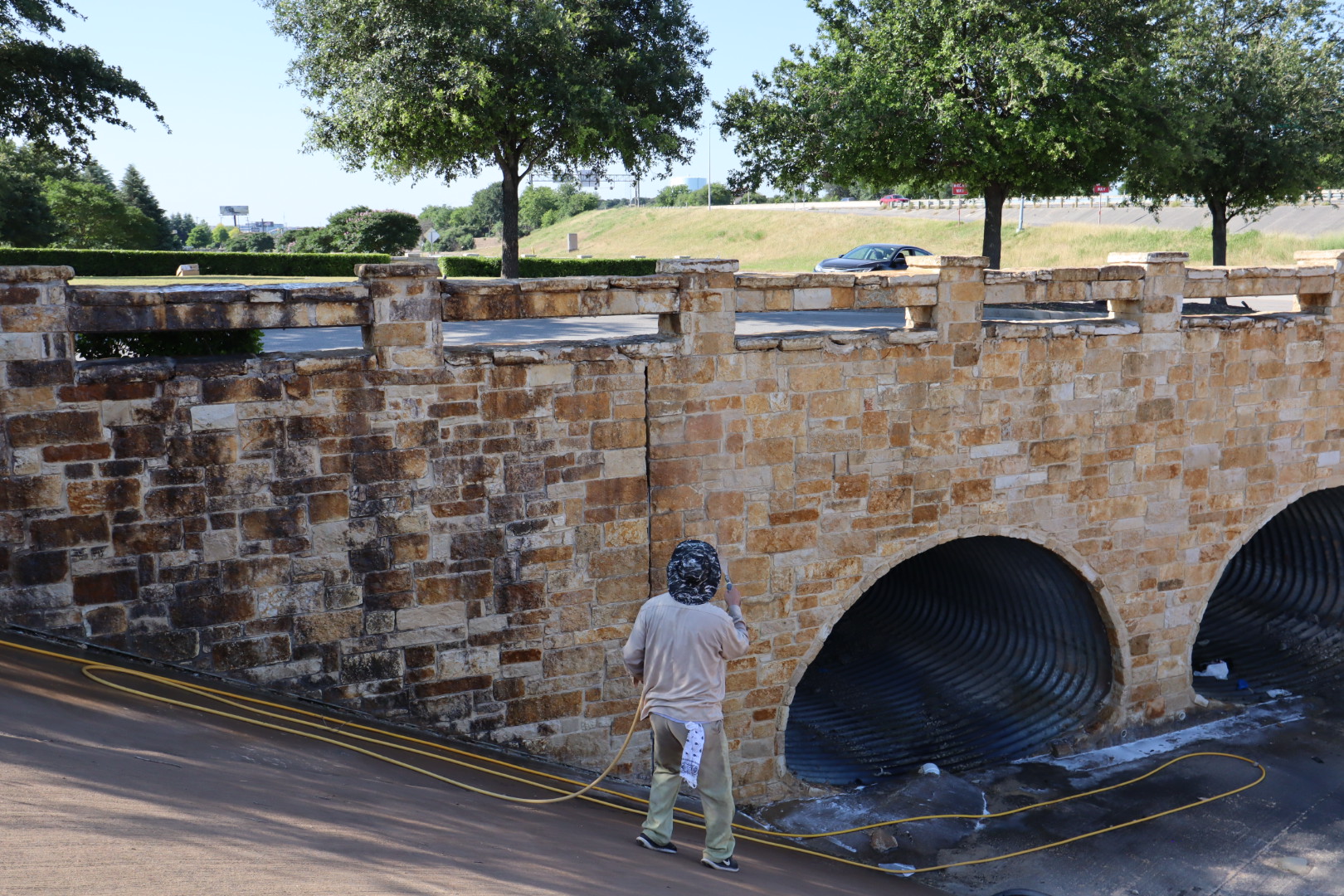
For the Rim project, we used our standard limestone protocol: a controlled, properly diluted soft-wash treatment applied at very low pressure — no more than a garden hose. The chemistry does the work. It kills the algae and lichen at the cellular level, loosens the atmospheric carbon binding everything together, and lifts the biological staining out of the pores of the stone.
Because we're not blasting the surface, we're not eroding the stone, we're not blowing out mortar joints, and we're not opening the pores for the next round of algae. We're simply killing what's alive on the stone and rinsing it away.
Why the Rim Bridges Still Look Clean Five Years Later
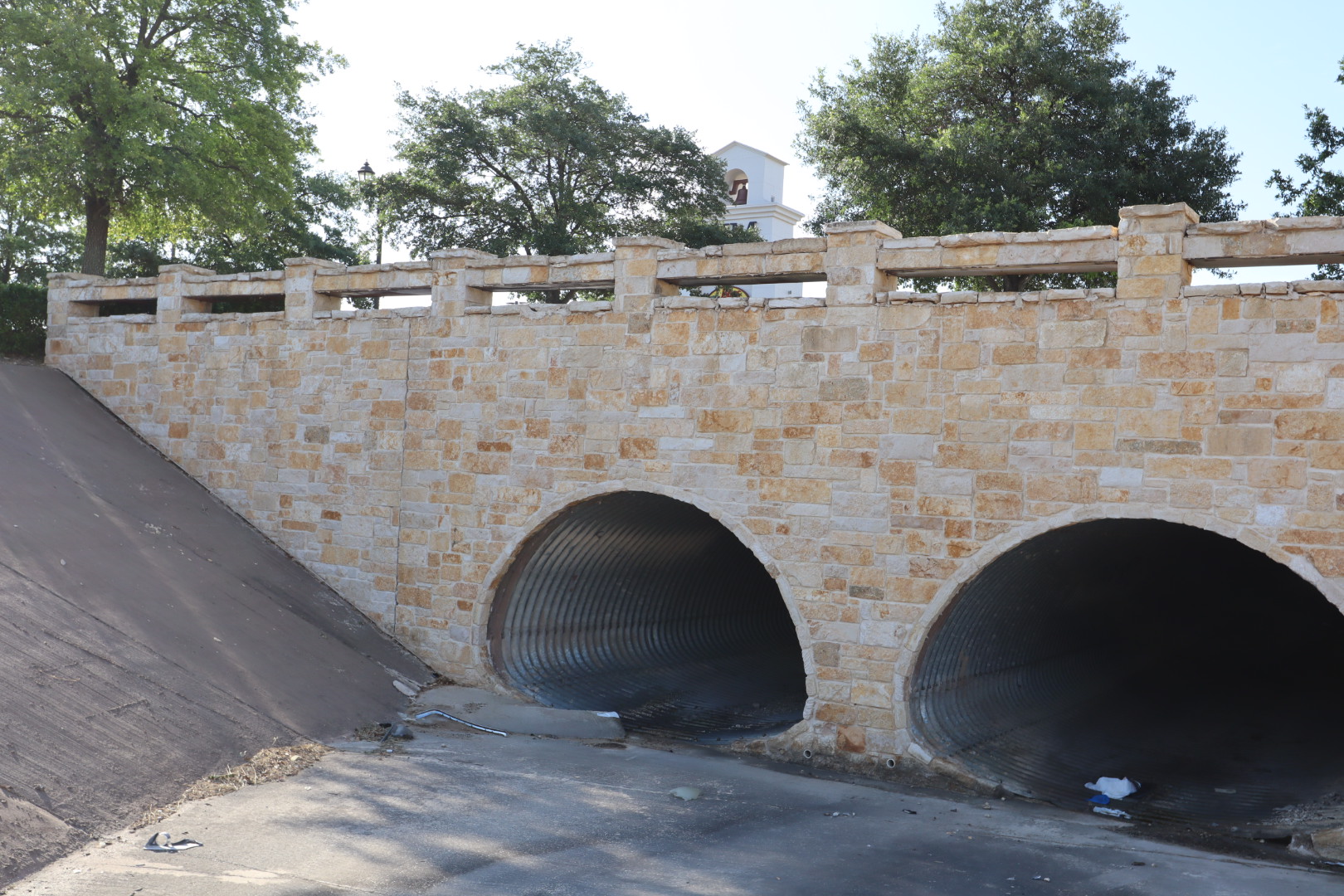
Here's the part most people don't believe until they see it. It has been more than five years since Texas Pure Clean cleaned those bridges at the Rim Shopping Center, and the limestone still looks clean today.
That longevity comes down to two things. First, because we killed the algae and lichen at the root instead of just blasting off the surface layer, there was nothing left to immediately regrow. The spores were dead, not just displaced. Second, because we didn't erode or roughen the surface, the stone didn't become a magnet for new biological growth the way pressure-washed limestone always does.
A pressure-washed bridge in that same location would have been streaking black again within 12 to 18 months. Soft-washed correctly, the same stone can hold clean for five years or more — even sitting directly next to a busy interstate.
What Proper Limestone Cleaning Includes
When Texas Pure Clean takes on a limestone project — whether it's a single residential entry column or an entire commercial bridge system like the Rim — the process is the same:
- Full site walk-through to identify staining types (biological, mineral, atmospheric, efflorescence) and any loose mortar or cracked stone that needs to be flagged before we introduce water.
- Pre-soak and protection of all surrounding landscaping, irrigation heads, and drainage channels.
- Application of the correct dilution of soft-wash solution for the specific stain profile — no guessing, no one-size-fits-all mix.
- Dwell time appropriate for the temperature and stain load, then a low-pressure rinse from the top down.
- Second-pass spot treatment on any remaining mineral bleed or stubborn lichen.
- Final rinse and walk-through with the property manager to sign off on results.
For high-value commercial properties like shopping centers, master-planned communities, and resorts, we can also apply a breathable mineral sealer after cleaning that further slows the return of biological growth without trapping moisture inside the stone.
Who This Service Is For
Limestone cleaning is one of the most requested services we get from property managers, HOAs, and homeowners across San Antonio and the surrounding Hill Country. If any of the following look familiar, it's time for a professional soft-wash cleaning:
- Community entry monuments and stone signage that have turned grey, green, or black.
- Retaining walls along drainage channels or shaded areas.
- Limestone bridges, columns, and archways at shopping centers, resorts, and master-planned communities.
- Residential Hill Country estates with limestone facades, chimneys, or entry columns.
- Historic and civic buildings where warranty and preservation matter and pressure washing is not an option.
The Bottom Line
Limestone is one of the most beautiful materials in Texas architecture, and it deserves to be treated like it. Done right, cleaning limestone doesn't just restore its color — it protects the investment for years to come. The Rim Shopping Center bridges are proof: five-plus years after our cleaning, the stone still looks the way it was meant to look.
If you have limestone that has gone dark, streaked, or green, don't let anyone touch it with a pressure washer. Call the team that has been cleaning Texas limestone the right way since 1990.
Ready to get it done right?
Texas Pure Clean has been the trusted name in San Antonio exterior cleaning for over 30 years.